
RiverPark Center Theatre Etiquette Project
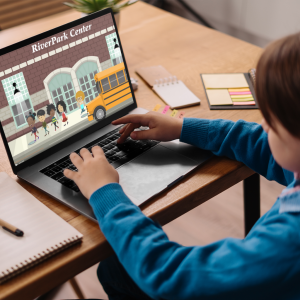
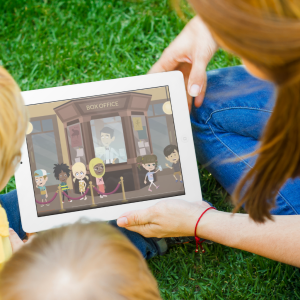
Designed to introduce K-5 students to theatre etiquette, this animated Vyond project is improving outreach education as well as organizational branding for the Riverpark Performing Arts Center in Owensboro, KY.
- Key Skills: Animation, e-Learning Development, & Instructional Design
- Audience: K-5 students, parents, and teaching staff
- Technology: Audacity, Vyond Video Authoring
- Budget: Low
Experience the Project
Overview

Storyboarding
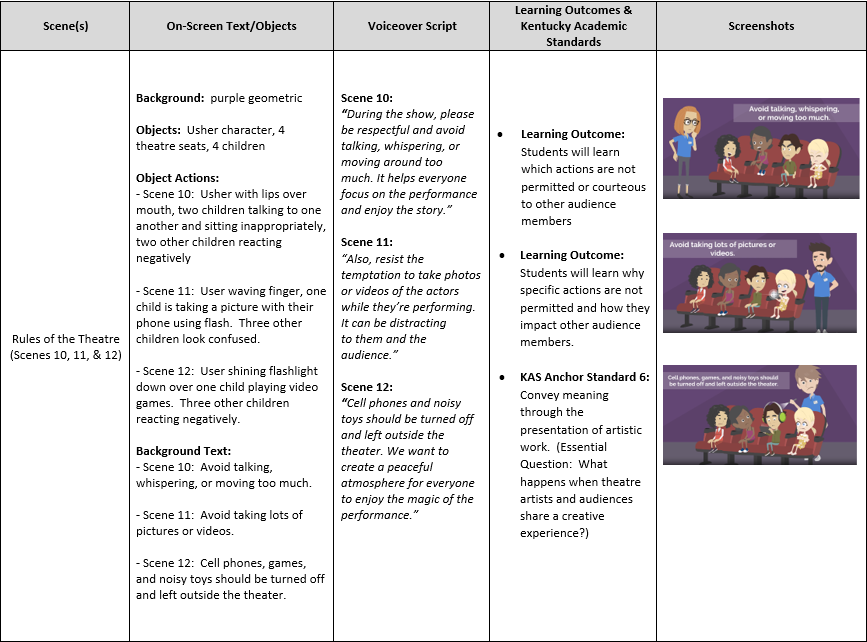
After proposing the idea of an animated instructional design video and receiving the historical and updated information as mentioned earlier, I translated this content into specific learning outcomes that would resonate with K-5 students. To ensure alignment with local educational standards, I anchored the project in the Kentucky Academic Standards for Theatre Appreciation. To seamlessly connect the RiverPark Center’s “Arts Teach Kids” educational objectives with the K-5 school environment, I adopted a backward design methodology. This approach involved crafting comprehensive visual descriptions and a voiceover script as foundational components that connected to the learning outcomes before diving into the visual design phase using Vyond Studio software.
With these visual descriptions and script in hand, I seamlessly integrated Vyond’s resources—encompassing objects, characters, and text—into each scene concept. To provide a tangible demonstration of this, I’ve included a storyboard sample below. Furthermore, in the final column of each scene, I included a screenshot showcasing the final design presented to the RiverPark Center staff.
Visual Design
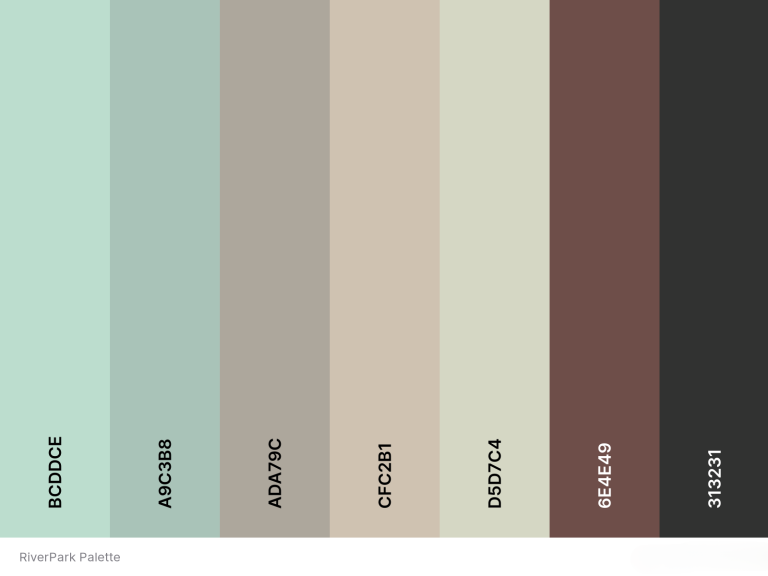
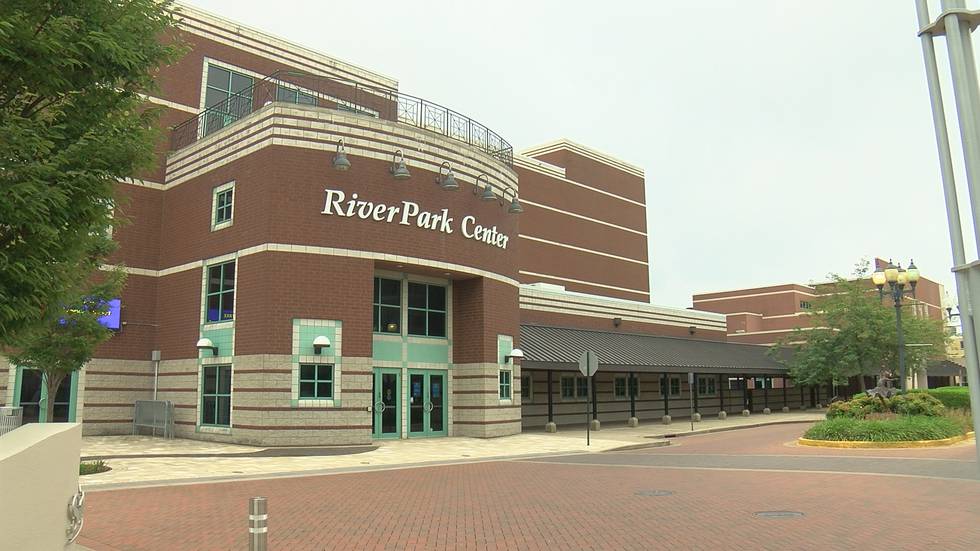
In crafting the animated e-Learning video, my goal was to deliver a refined product that would resonate with the RiverPark Center, regional educators, and the K-5 students engaging with the content. To achieve this, I initiated the development of a comprehensive branding kit. Leveraging a provided logo, I curated a complementary color palette inspired by the RiverPark Center’s architectural aesthetics. Additionally, I employed specialized software to unveil the font featured on the Center’s façade—a previously unknown detail to the current RiverPark staff. Utilizing a blend of photographs and Vyond video authoring assets, I meticulously recreated the RiverPark Center’s design elements within the video. This strategic approach served a dual purpose: it infused the “Arts Teach Kids” (ATK) program with an additional layer of branding depth while also fostering a tangible connection for students between their learning journey and their real-world experiences of visiting the Center. The outcome is an entertaining yet cohesive e-Learning experience that bridges the classroom and the RiverPark Center.

Audio Design
Regarding the voiceover aspect of the project, the RiverPark Center collaborated with a local radio personality, Mel Ford, who graciously volunteered her voiceover skills. Using the script I developed, Mel recorded the initial raw voiceover audio, which was then forwarded to me. Once in receipt of the voiceover audio, I employed tools such as Audacity and Vyond assets to incorporate background music that harmonized with the video’s tone. Guided by the combined voiceover and music files, I carefully synchronized Mel’s voiceover with the rhythm of each scene. Employing Dolby sound technology, I fine-tuned audio levels, eliminated extraneous noise, and harmonized the voiceover with an upbeat background track. The outcome ensured a prominent, engaging voiceover that resonates with the audience, enhancing the overall video experience.
Production
As previously mentioned, during the production of this animated video, I opted for Vyond video authoring software due to its authoring agility and array of animated assets. For the Theatre Etiquette video, I exclusively utilized the “Business Friendly” asset collection from Vyond due to its extensive library, featuring child characters that ensured consistency across every scene. When it came to characters, my intent was to present a diverse representation in each scene. Thus, as you engage with the project, you’ll encounter children and adults from various backgrounds, encompassing different abilities, religions, and ethnicities. This approach was a natural extension of my previous work with the RiverPark Center in the realm of diversity, equity, and inclusion. I aimed to ensure that the foundational principles we established in this area were seamlessly integrated into this “Arts Teach Kids” project.
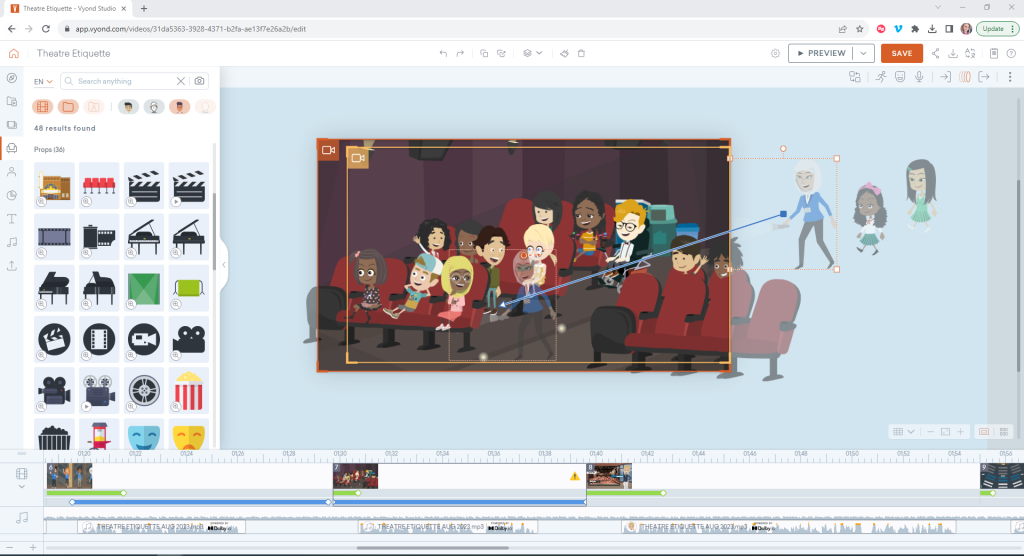
Throughout the design of each scene, my primary focus was on incorporating movement to enhance engagement and visually address the learning outcomes. This was accomplished by employing a combination of camera movements, zooming, motion paths, expressions, and actions. A snapshot of one scene’s workflow is provided below, illustrating how the camera pans in to immerse the viewer in the setting. Simultaneously, the user and two young children walk down the aisle using a motion path. In the backdrop, each child is portrayed with expressions and/or actions—reflecting typical pre-show behavior in a theatre context. All these dynamic elements coalesce to effectively convey the role of an usher in guiding patrons to their seats, aligning with our established learning outcomes.
Conclusion
Following the development of a prototype and a series of collaborative feedback rounds, the ultimate outcome (showcased above) was presented to the RiverPark Center team, who received it with genuine enthusiasm, gratitude, and eagerness to enhance educational outreach to nearby schools. Personally, I found immense satisfaction in this instructional design venture, as it afforded me the opportunity to transition towards a novel audience—K-5 students and staff. This was a notable departure from my previous
work primarily focused on adult learners within higher education and corporate environments. Looking ahead, my aspiration is to sustain my collaboration with the RiverPark Center, continually contributing to the creation of compelling e-Learning experiences centered around theatre education for their “Arts Teach Kids” program.


