
VitaMed Solutions Augmented Reality Training
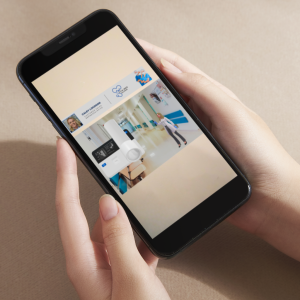
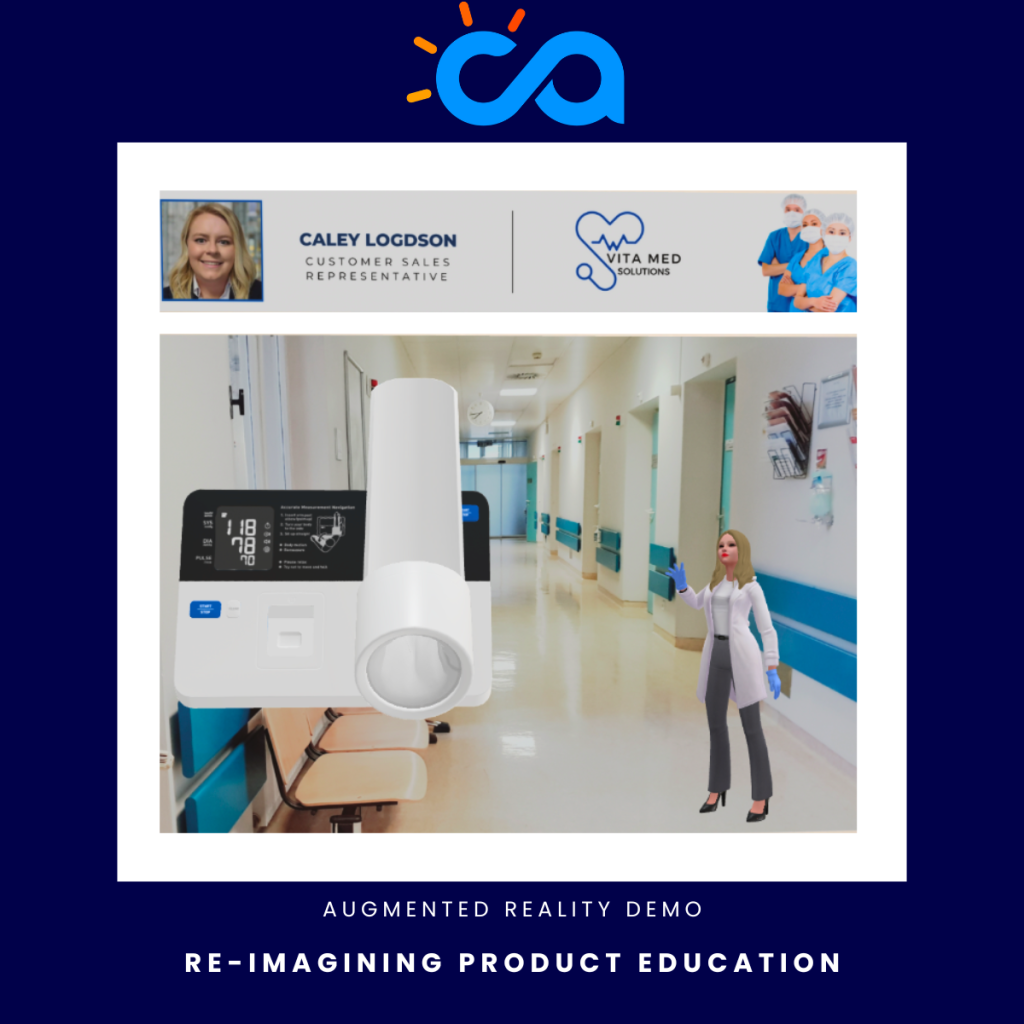
Developed to educate both sales representatives and potential clients, this conceptual augmented reality training uses a mobile-responsive platform to introduce VitaMed Solution's latest product--the Precision Pressure 4.0 blood pressure monitor.
- Key Skills: Augmented Reality, e-Learning Development, & Instructional Design
- Audience: VitaMed Customer Service Representatives & Customers
- Technology: Adobe Mixamo, Audacity, Blender, Blippar, & Ready Player Me
- Budget: Low to Medium
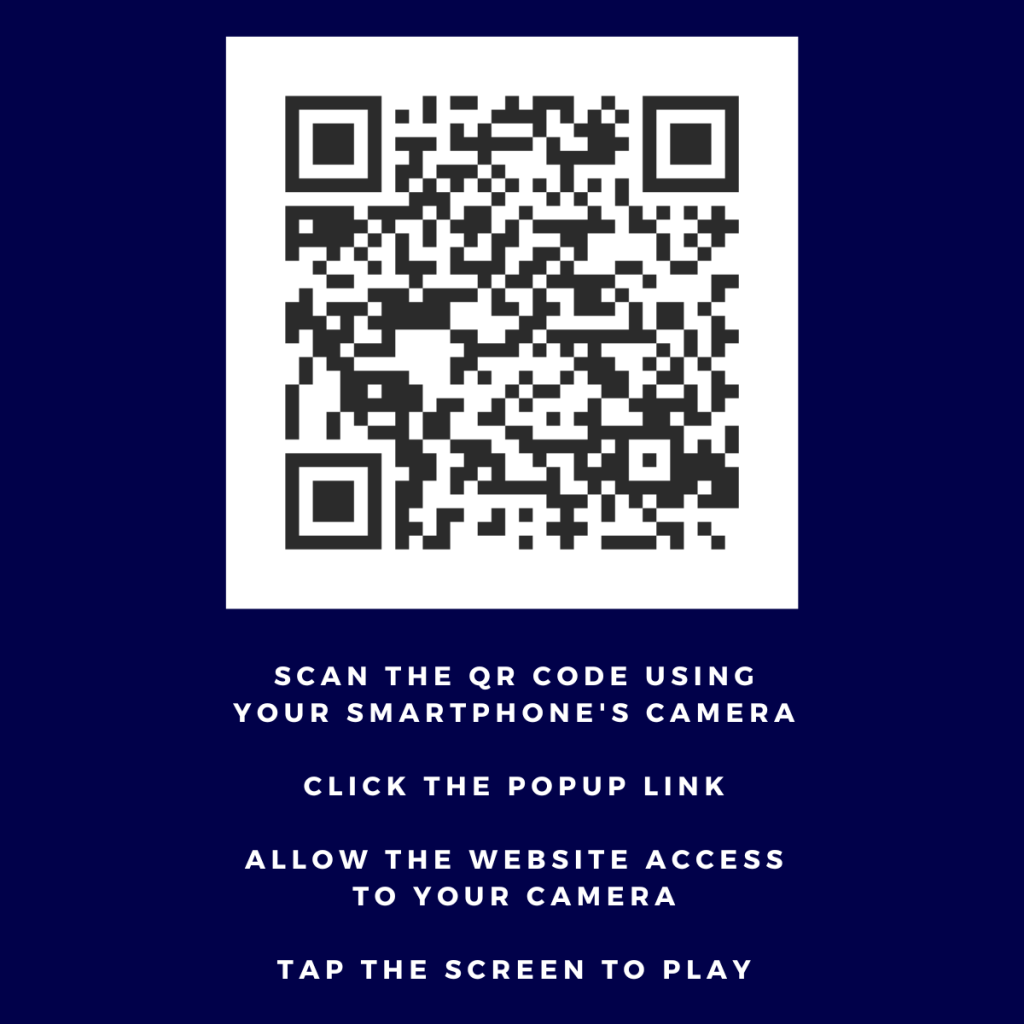
Experience the Demo
Overview
While I’ve always been drawn to instructional design technologies and hands-on training in my career, my fascination with augmented reality was sparked when I saw how it was revolutionizing various industries, including real estate and manufacturing. Based on personal experiences with augmented reality from these sectors, I was inspired to dive into the possibilities. The project I initiated was creating a mobile-responsive conceptual training, blending the retail/sales environments with immersive three-dimensional learning. Over a dedicated two-week period, I focused on every detail from planning the user experience and scripting the content to sourcing the necessary objects. The culmination of these efforts resulted in the above final training product, a testament to the exciting fusion of technology and education.
Instructional Design
Leveraging the backwards design methodology, I began the project by writing my learning outcomes. By beginning with “the end” in mind; I find that I become much more focused and intentional about my scripts and storyboarding. I have included a sample of these learning outcomes below:
Sales Representative Learning Outcomes
- Product Knowledge: After completing the training, sales representatives will be able to comprehensively explain the features and benefits of the Precision Pressure 4.0 blood pressure device to potential clients.
- Technical Expertise: Sales representatives will gain a deep understanding of the device’s technical specifications, including its accuracy rate, measurement units, and ergonomic design, enabling them to address clients’ technical queries effectively.
- Demonstration Proficiency: Upon training completion, sales representatives will be able to proficiently demonstrate how to operate the Precision Pressure 4.0, showcasing its various buttons, ergonomic design, and user-friendly interface.
- Price Justification: Sales representatives will learn to justify the investment in the Precision Pressure 4.0 by outlining its exceptional features, accuracy rate, and long-term value to potential clients, enhancing their ability to make persuasive sales pitches.
- Client Relationship Building: After training, sales representatives will understand the importance of building strong client relationships by conveying the benefits of the Precision Pressure 4.0, addressing concerns, and highlighting the available warranty and customer service.
During this process, I also realized that there were specific objects or assets that I would need to create on my own including my own avatar, to increase learner engagement. Utilizing tools like Adobe Mixamo, Ready Player Me, and Blender; I was able to create a three-dimensional rendering of myself in a lab coat as well as animate myself during the voiceover. Below, I have included 3D renderings of both my avatar and the sourced VitaMed Solutions blood pressure monitor. Additionally, I have also included animation footage from both Mixamo and Blender to demonstrate the range of armatures available and my armature workflow.
3D Model Creation & Sourcing
3D Model Animation
Augmented Reality Prototype
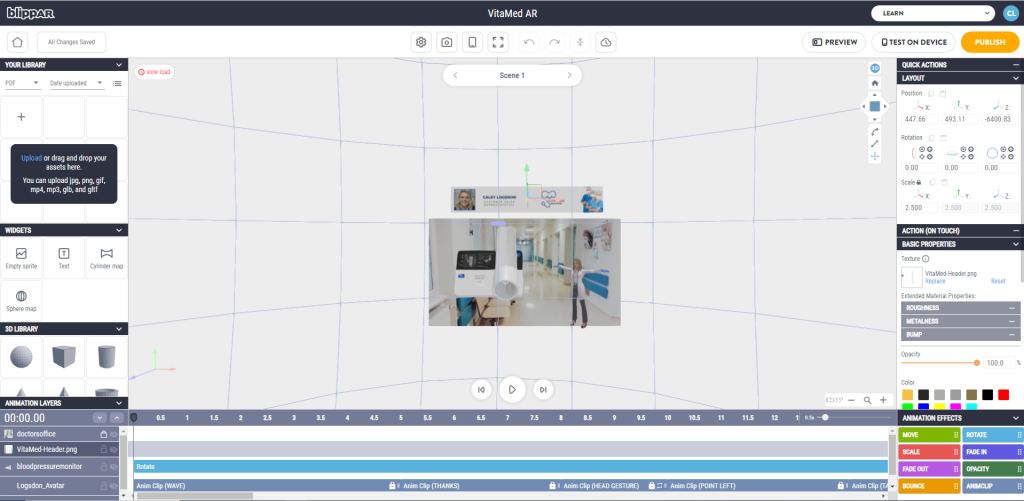
With the learning outcomes, script, and object sourcing complete, I turned my attention to platform exploration for the augmented reality prototype. The assessment and evaluation of various platforms – namely Vuforia, Adobe Aero, and Blippar – became an essential phase in bringing this project to fruition. Each platform certainly had its strengths, yet after a thorough evaluation, I opted to use Blippar. With its versatility in accommodating both Android and iPhone users, ability to import armatures, and easy user interface (see below)–the advantages were clear.
Once I selected Blippar I began assembling my scene in the three-dimensional canvas; experimenting with the postion of the scene among the X, Y, and Z axes. Ultimately, I settled on positioning my scene directly in front of the user to prevent confusion for users experiencing augmented reality for the first time. During my scene assembly, I also wanted to draw attention to the Precision Pressure 4.0 by rotating the monitor on the y-axis. Through this rotation, both sales representatives and clients can have a 360 degree view of the monitor’s features–many of which are covered in the learning outcomes as well as the scripted voiceover.
Conclusion
After assembling and thorough testing of the prototype, I took the liberty of sharing this project with my fellow colleagues at Revolutionary Clinics to gather their feedback and insights. The feedback was incredibly positive as many of my colleagues had never experienced augmented reality before. As a result of this exposure, I have also found many of my colleagues excitedly asking questions, brainstorming new cross-functional partnerships, and looking for opportunities to leverage augmented reality across the company. As a result of this project, I have learned more about spatial dynamics and animation; however, there are two areas of augmented reality that I would still like to explore. One area is the use of positionality and how instructional designers or L&D professionals might be able to craft learning experiences using surfaces and avatars. Another area is how industries might be able to use augmented reality to become safer, more OSHA compliant, and prepared for emergencies.
Within manufacturing facilities; particularly those with hazardous machines and chemicals, it is important that individuals know how to successful and safetly shut down operations. These situations in a training environment, however, are challenging to duplicate without losing valuable production time and subsequent revenue. My guiding question in this second area is: “What could it look like if we used augmented reality to simulate crisis response without negatively impacting production?”


